
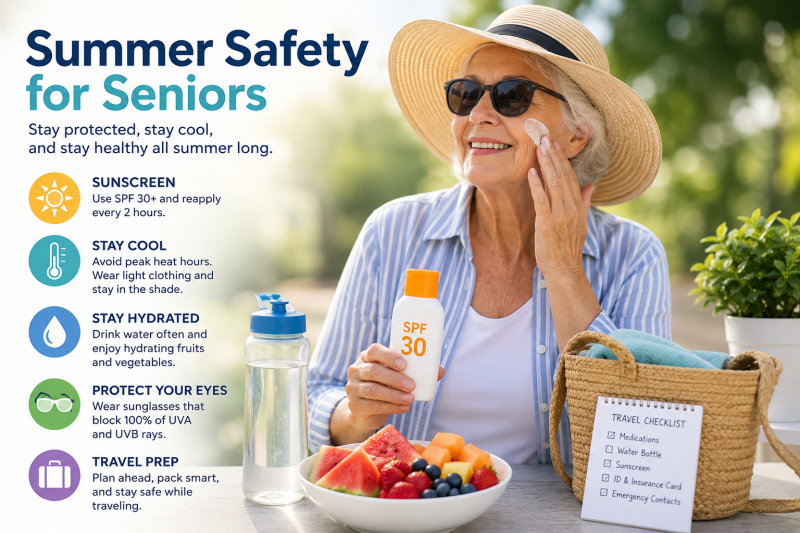
Summer Safety Tips for Seniors: Staying Healthy, Hydrated, and Protected All Season Long
Summer brings longer days, outdoor activities, family gatherings, and travel opportunities. While the season offers many benefits, warmer temperatures and increased sun exposure can also create health risks, especially for older adults and individuals with chronic medical conditions.
Whether you're enjoying time outdoors or preparing for a summer vacation, taking a few simple precautions can help you stay safe, comfortable, and healthy throughout the season.
Protect Your Skin from the Sun
Sun exposure can increase the risk of sunburn, skin damage, and skin cancer. Older adults may be especially vulnerable because aging skin is often thinner and more sensitive.
To help protect your skin:
-
Apply a broad-spectrum sunscreen with SPF 30 or higher.
-
Reapply sunscreen every two hours when outdoors and after swimming or sweating.
-
Wear lightweight long-sleeved clothing, wide-brimmed hats, and sunglasses.
-
Seek shade whenever possible, especially between 10 a.m. and 4 p.m. when UV rays are strongest.
If you take medications, ask your healthcare provider whether they increase sensitivity to sunlight.
Stay Cool and Prevent Overheating
As we age, the body's ability to regulate temperature may become less efficient. This can increase the risk of heat exhaustion and heat stroke.
Signs of overheating may include:
-
Dizziness
-
Headache
-
Excessive sweating
-
Weakness or fatigue
-
Nausea
-
Rapid heartbeat
-
Confusion
To stay cool:
-
Remain indoors during the hottest part of the day.
-
Use air conditioning or fans whenever possible.
-
Wear loose-fitting, light-colored clothing.
-
Take frequent breaks if spending time outdoors.
-
Never remain in a parked vehicle, even for a short period.
If symptoms of heat-related illness occur, move to a cool environment and seek medical attention if symptoms are severe or do not improve.
Prioritize Hydration
Proper hydration is one of the most important aspects of summer health. Older adults may not feel thirsty even when their bodies need fluids.
Helpful hydration tips include:
-
Drink water regularly throughout the day.
-
Carry a reusable water bottle when leaving home.
-
Limit excessive caffeine and alcohol, which can contribute to dehydration.
-
Increase fluid intake during hot weather or physical activity.
Many fruits and vegetables can also help support hydration, including:
-
Watermelon
-
Strawberries
-
Cantaloupe
-
Peaches
-
Oranges
-
Cucumbers
-
Celery
-
Tomatoes
These foods provide both fluids and important nutrients.
Don't Forget Eye Protection
The sun's ultraviolet (UV) rays can affect eye health just as they affect the skin. Long-term UV exposure has been associated with eye conditions such as cataracts and other forms of ocular damage.
When outdoors:
-
Wear sunglasses that block 100% of UVA and UVB rays.
-
Consider wraparound styles for additional protection.
-
Wear a hat with a brim to reduce direct sun exposure to the eyes.
-
Stay hydrated, as dehydration can contribute to eye discomfort and dryness.
Review Medications Before Summer Activities
Some medications can increase sensitivity to heat or sunlight, making outdoor activities more challenging.
Before spending extended time outdoors or traveling, review medications with your physician or pharmacist and ask whether any special precautions are recommended.
Prepare for Summer Travel
Travel can be enjoyable, but proper planning helps prevent unnecessary health concerns.
Before your trip:
-
Pack enough medications for the entire trip plus a few extra days.
-
Bring a list of medications, healthcare providers, and emergency contacts.
-
Stay hydrated during flights and road trips.
-
Take breaks to stretch and move around during long periods of sitting.
-
Research local medical facilities at your destination if traveling far from home.
Caregivers should also ensure that medical supplies, mobility aids, and necessary equipment are packed and easily accessible.
Practice Water Safety
Swimming pools, lakes, and beaches are popular summer destinations, but they can present safety risks.
Remember to:
-
Never swim alone.
-
Use handrails and non-slip footwear around wet surfaces.
-
Stay within designated swimming areas.
-
Avoid swimming when feeling fatigued or overheated.
How Home Care Can Help During the Summer
Professional caregivers can help seniors stay safe during warmer months by encouraging hydration, monitoring for signs of heat-related illness, assisting with medication management, providing transportation to appointments, and supporting daily activities.
With a little planning and awareness, older adults can enjoy all the benefits of summer while minimizing seasonal health risks.
If you or a loved one could benefit from additional support this summer, the compassionate team at Allure Home Care is here to help.
- Log in to post comments